



























Prep Time: 20 minutes
Cook Time: 2.5–3 hours
Servings: 4
Cuisine: Persian
Dish: Khoresh Fesenjan / Persian Walnut and Pomegranate Stew
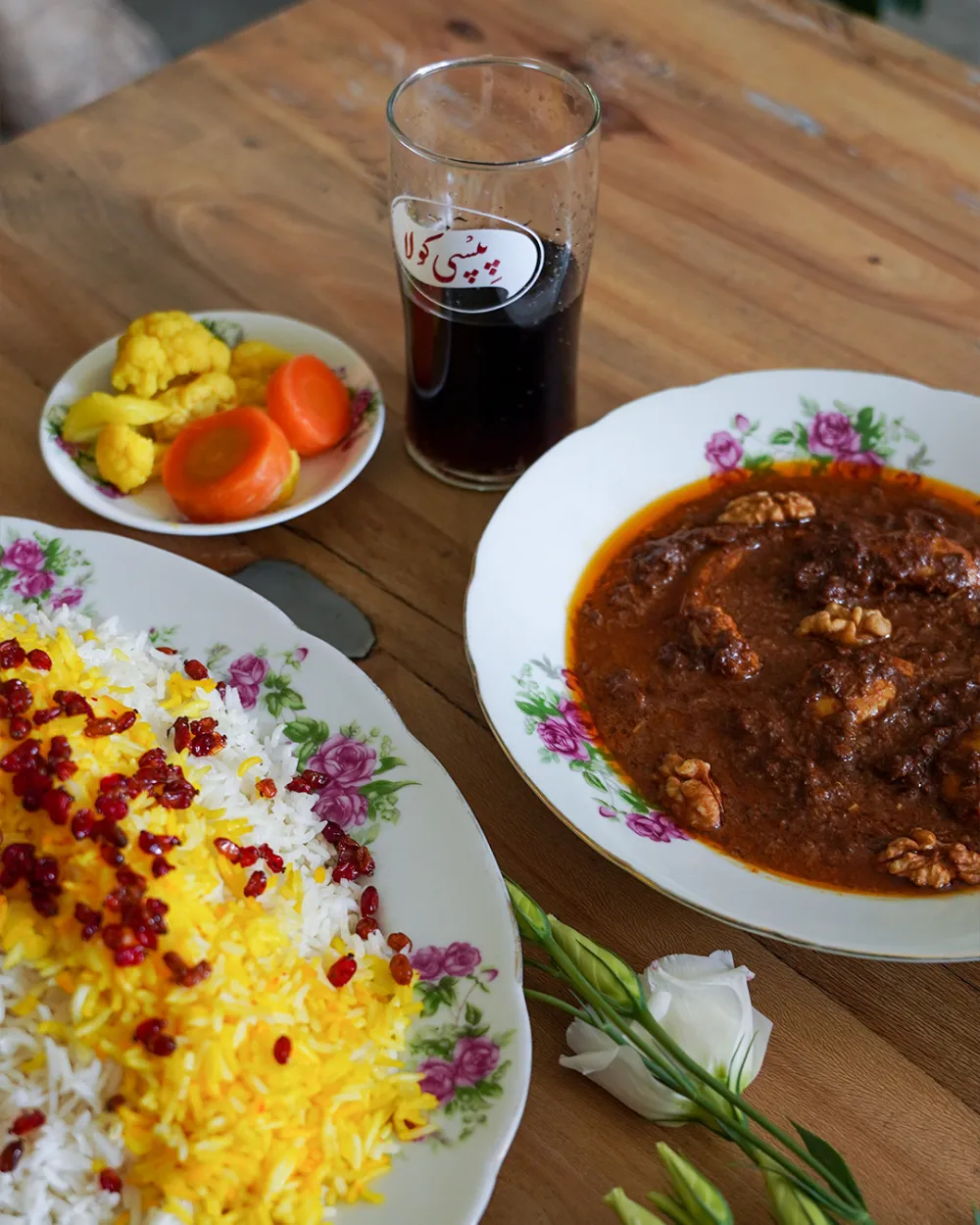
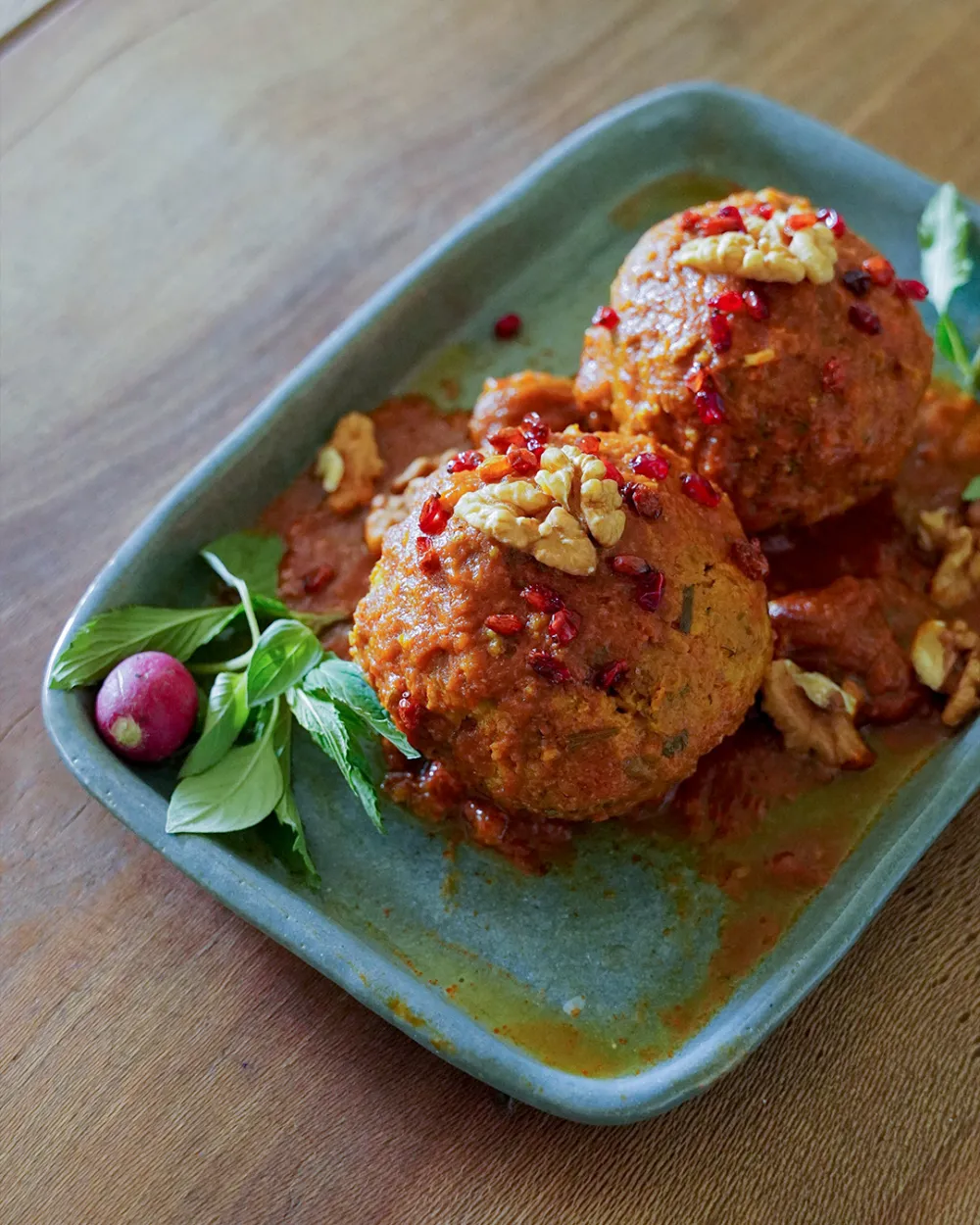
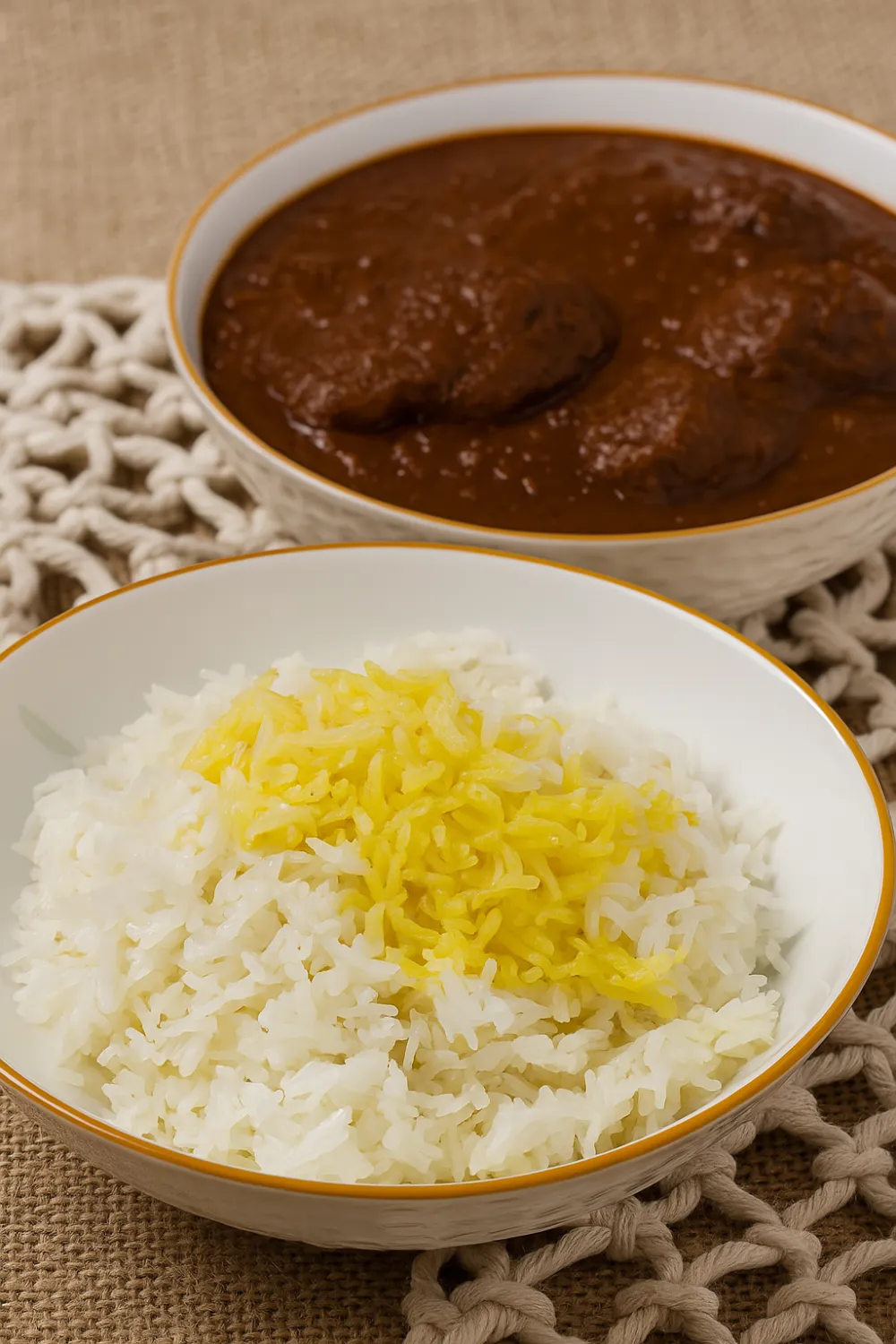
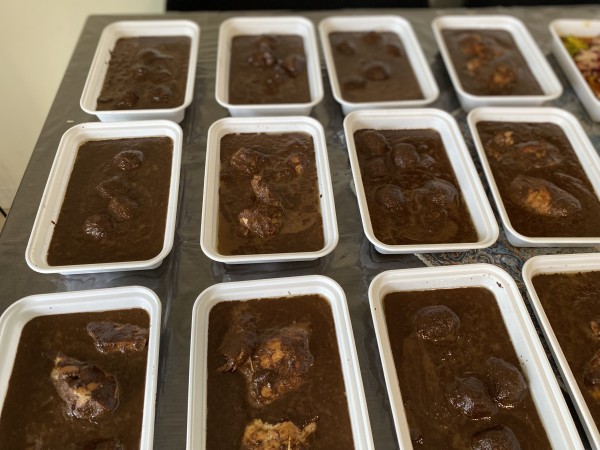
Fesenjan is one of the most distinctive Persian stews, made with finely ground walnuts, pomegranate molasses, and chicken. The key to a good Fesenjan is slow cooking. The walnuts need enough time to release their natural oils and create the dark, rich texture the dish is known for.
Ingredients
- 300 g walnuts
- 4 chicken thighs or chicken pieces
- 1 medium onion, finely chopped or grated
- 4–6 tbsp pomegranate molasses
- 4 cups cold water, plus more if needed
- 1 tbsp sugar, or to taste
- ½ tsp turmeric
- ¼ tsp black pepper
- Salt, to taste
- 1–2 tbsp neutral cooking oil
Instructions
1. Grind the walnuts
Finely grind the walnuts in a food processor. They should be very fine and slightly moist, but not completely turned into walnut butter.
Finely ground walnuts help the stew develop its characteristic creamy texture and release more natural walnut oil during cooking.
2. Cook the onion
Heat a small amount of oil in a heavy-bottomed pot over medium-low heat.
Add the onion and cook until soft and lightly golden.
Add the turmeric and stir for about 30 seconds.
3. Add the walnuts
Add the ground walnuts to the onion.
Cook gently for about 2–3 minutes, stirring continuously. Avoid browning the walnuts because excessive heat can make them bitter.
4. Add cold water
Pour in approximately 4 cups of cold water and stir well.
Bring the mixture to a gentle boil, then reduce the heat to low.
Allow the walnut mixture to simmer slowly for approximately 1 to 1½ hours.
Stir occasionally to prevent the walnuts from sticking to the bottom of the pot.
5. Encourage the walnuts to release their oil
During cooking, add a small amount of cold water when necessary.
Some Persian cooks also add one or two ice cubes occasionally. The temperature change can help encourage the walnuts to release their natural oils.
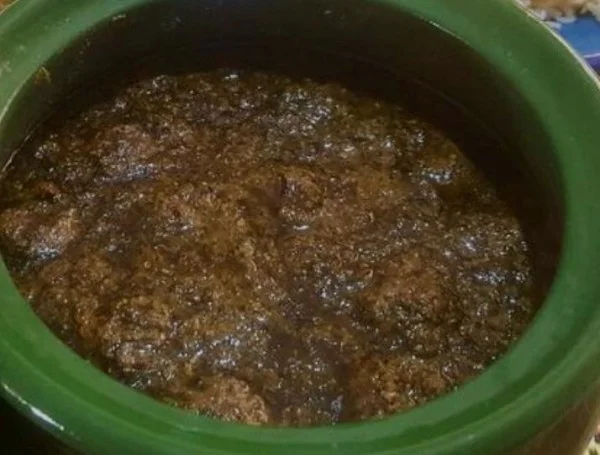
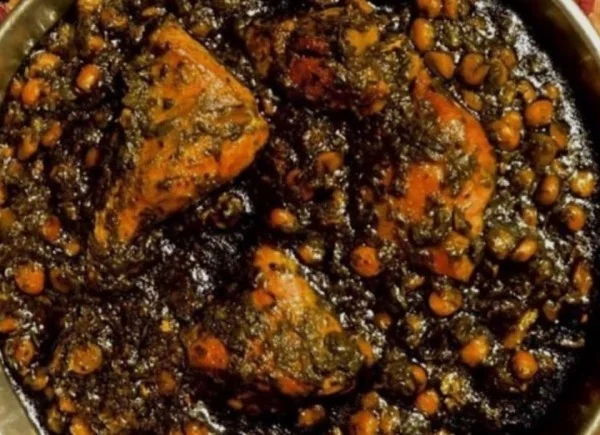
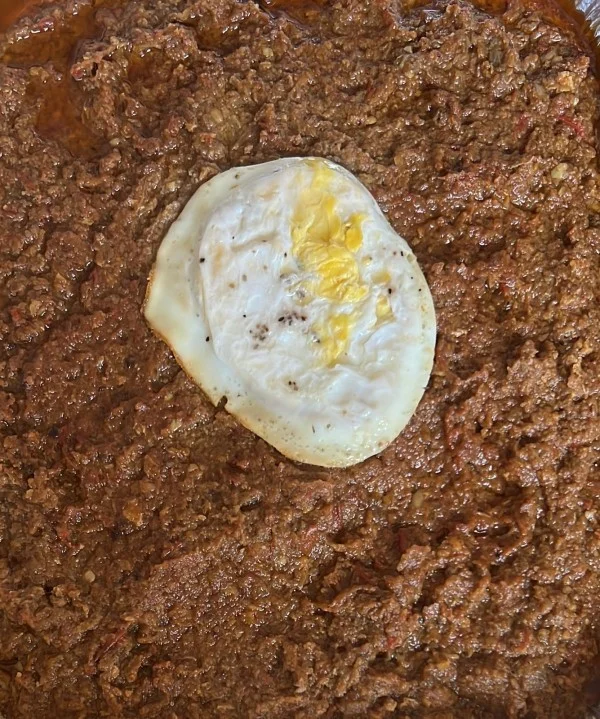
The stew should gradually become darker, thicker and glossier.
6. Prepare the chicken
Season the chicken lightly with salt, black pepper and a little turmeric.
In a separate pan, lightly brown the chicken on both sides.
The chicken does not need to cook completely at this stage.
7. Add the chicken and pomegranate molasses
After the walnuts have cooked for approximately 1 hour, add:
- the browned chicken
- 4 tablespoons of pomegranate molasses
Stir gently.
Continue cooking over very low heat for another 1 to 1½ hours.
8. Adjust the flavour
Taste the stew during the final 30 minutes.
Add additional pomegranate molasses if you prefer a stronger or more tart flavour.
If the stew is too sour, add approximately 1 tablespoon of sugar and adjust gradually.
The goal is not to make the stew noticeably sweet. The sweetness should simply balance the acidity of the pomegranate.
9. Finish the stew
The Fesenjan is ready when:
- the sauce is thick and glossy
- the colour has become deep brown
- walnut oil is visible on the surface
- the chicken is tender
- the walnut and pomegranate flavours have fully developed
Taste and adjust the salt before serving.
How to Serve Fesenjan
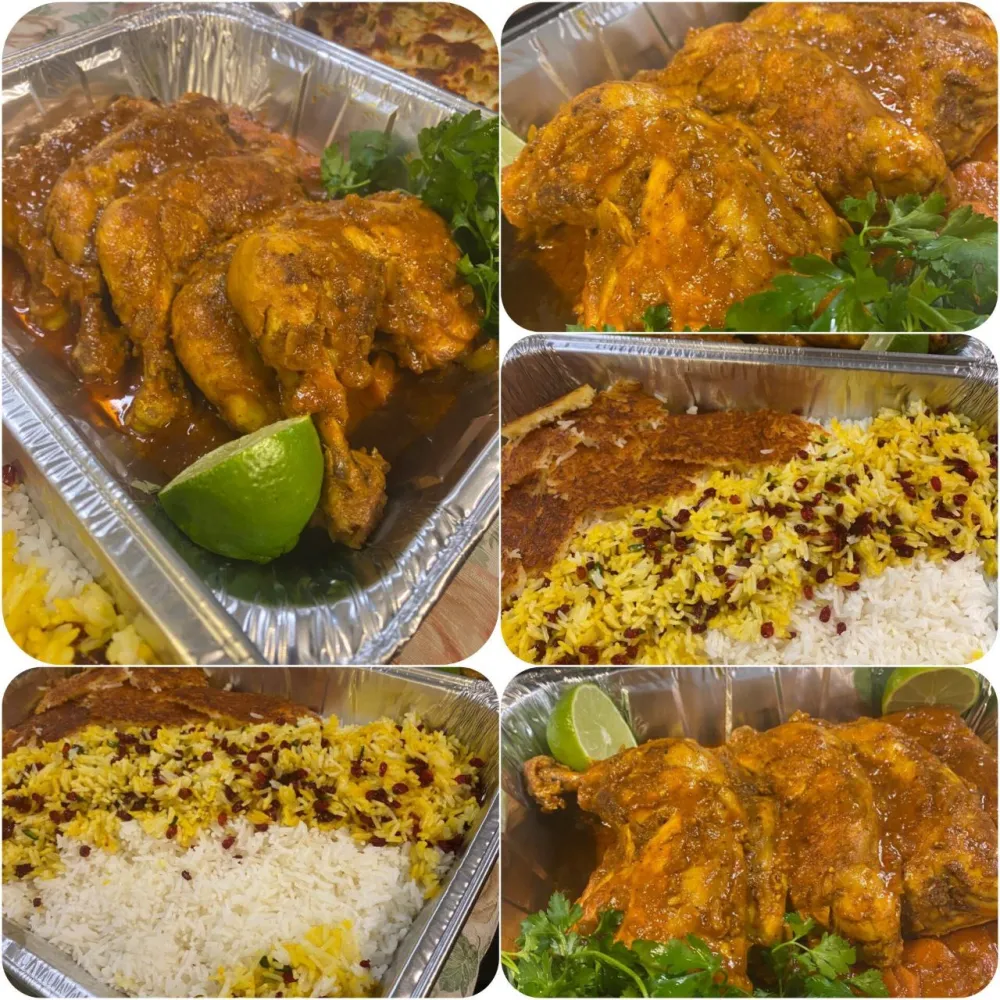
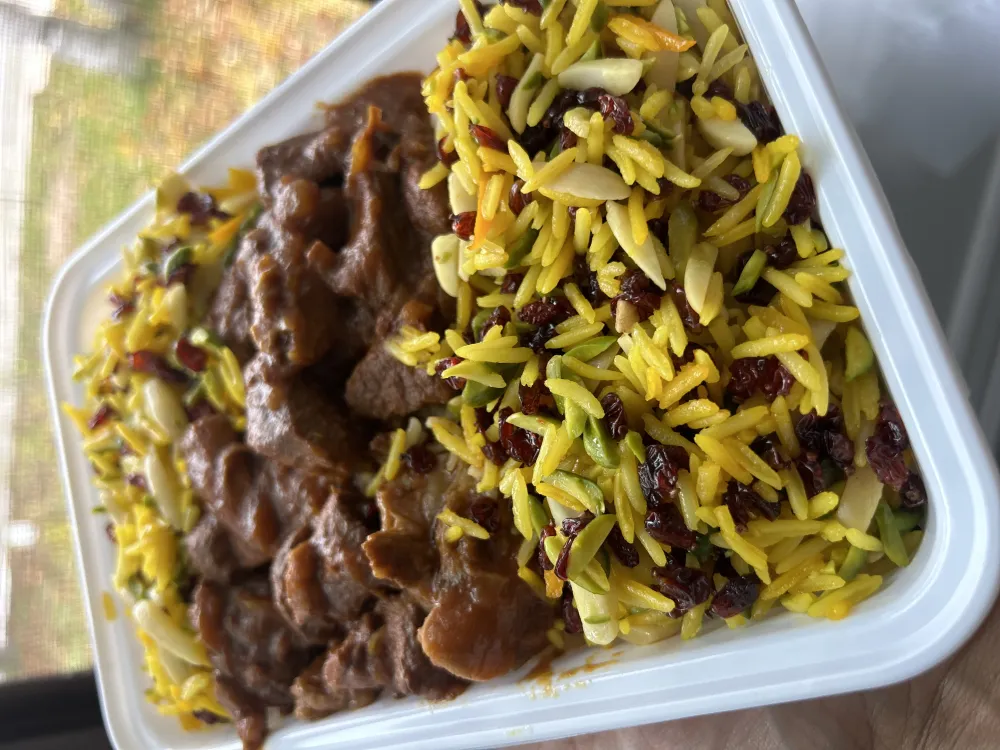
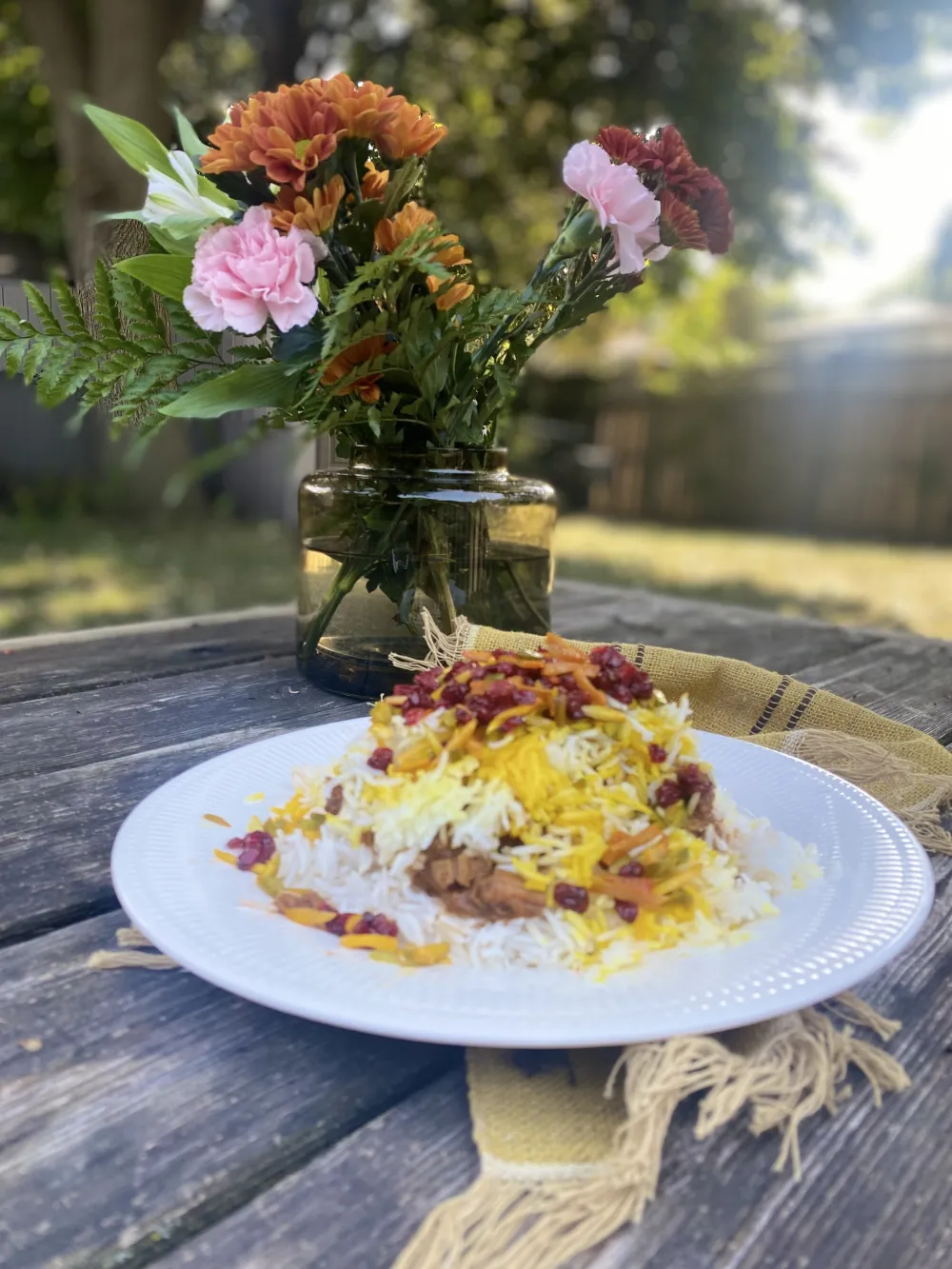
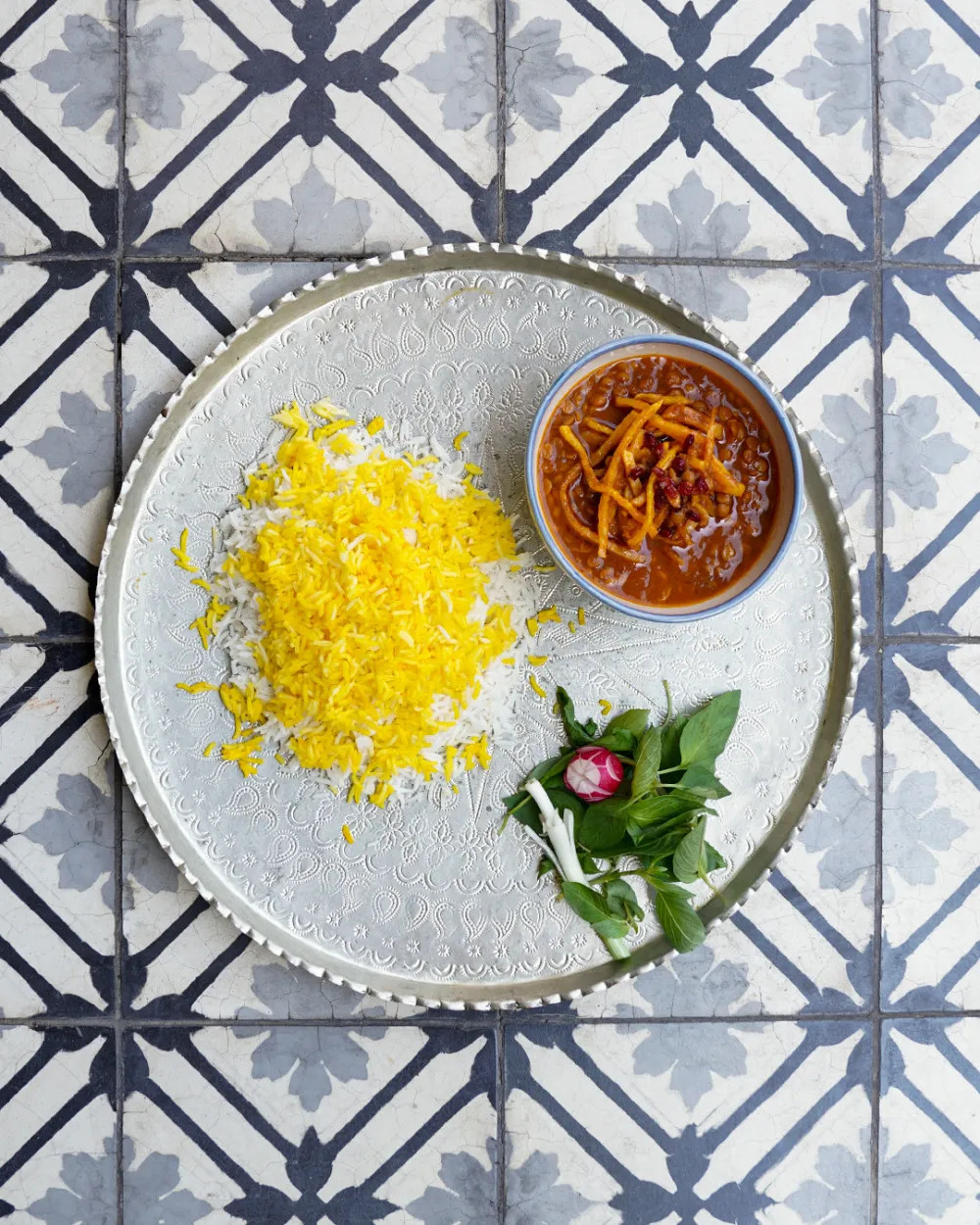
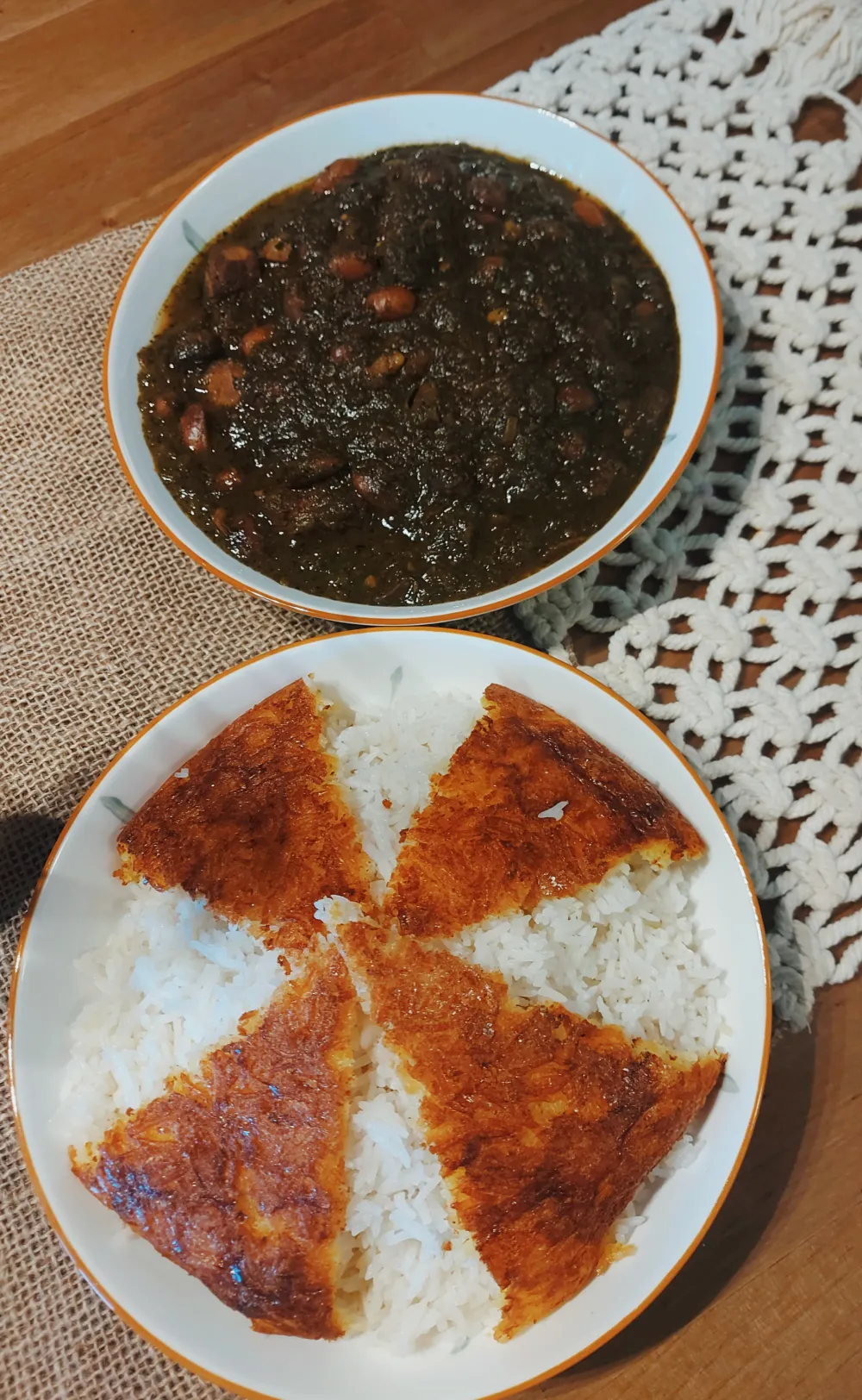
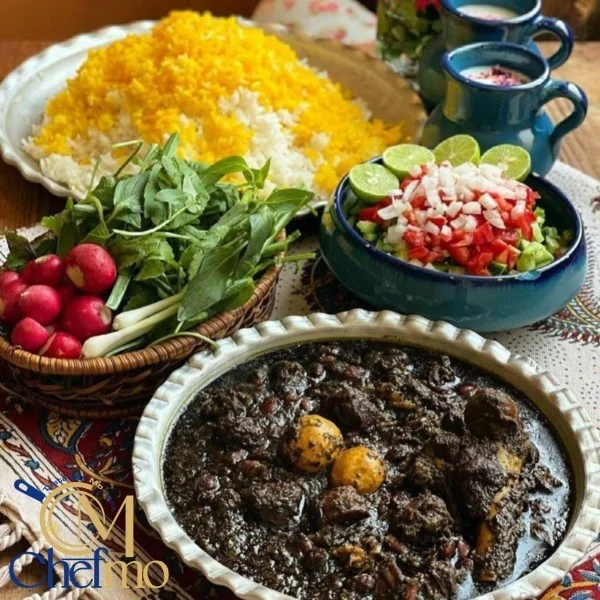
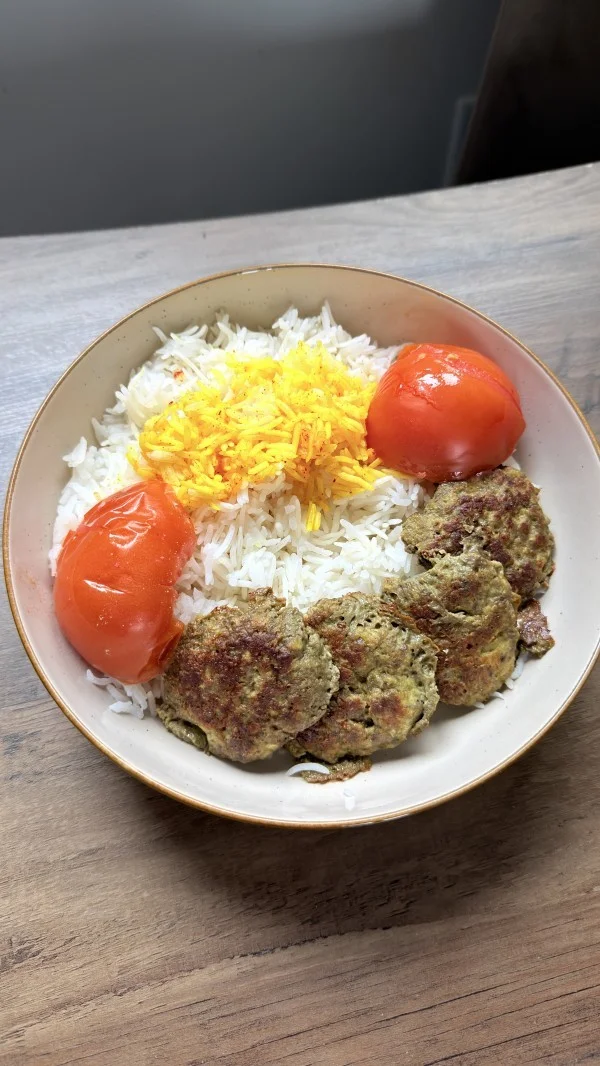
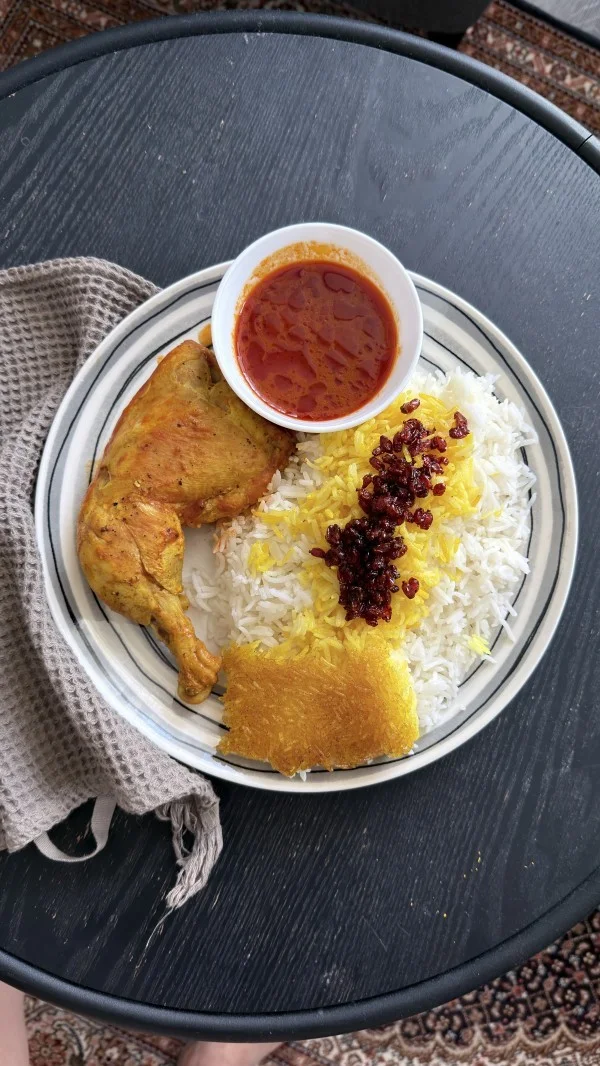
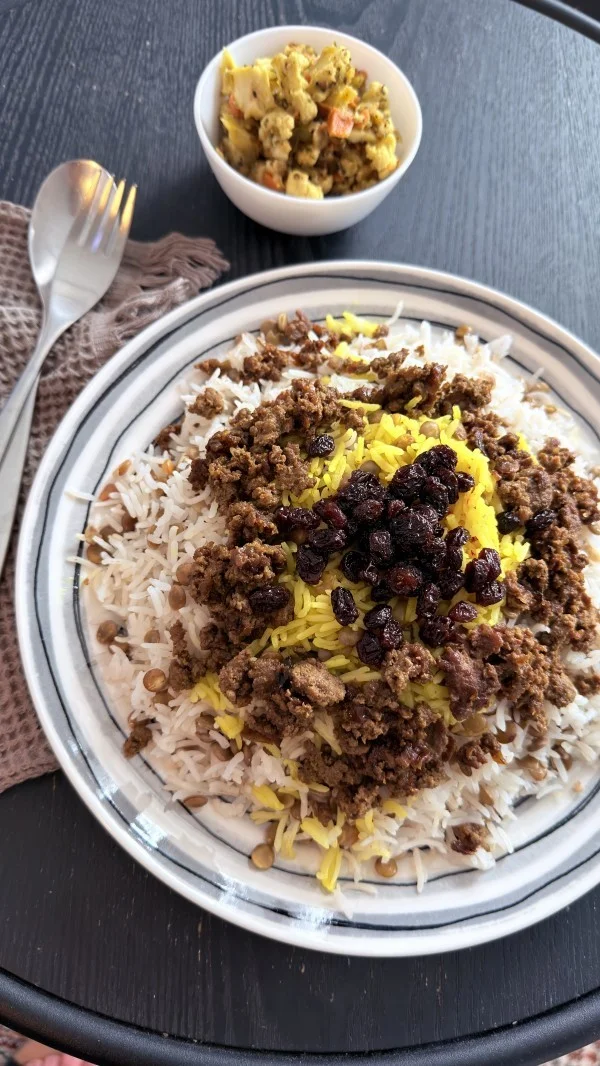
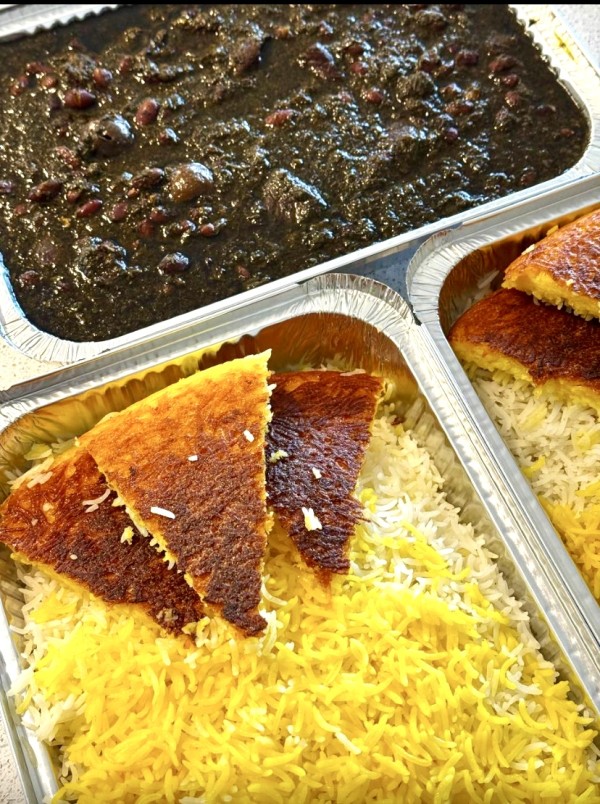
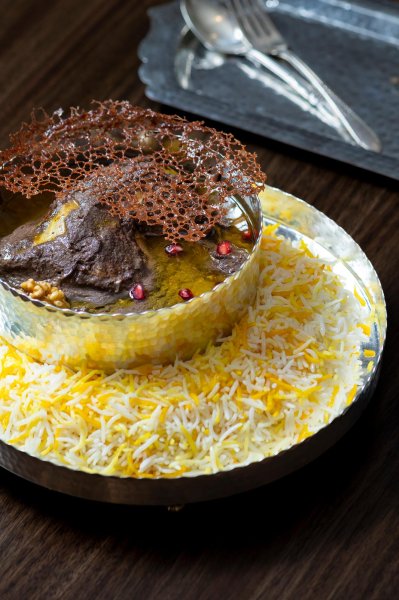
Fesenjan is traditionally served with Persian steamed rice.
For a simple presentation, serve the stew beside or over white basmati rice. A small amount of saffron rice can also be added for contrast.
Tips for Better Fesenjan
Use good-quality walnuts.
Fresh walnuts produce a cleaner flavour and release more oil. Old walnuts can make the stew taste bitter.
Use chicken thighs when possible.
Chicken thighs remain more tender during the long cooking process than chicken breast.
Cook slowly.
Fesenjan should simmer gently. High heat can cause the walnuts to burn or create a bitter flavour.
Do not add too much sugar at once.
Pomegranate molasses varies significantly between brands. Some are very sour, while others are naturally sweeter.
Give the walnuts enough time.
A properly cooked Fesenjan cannot be rushed. The long simmering time is what creates the characteristic dark colour and velvety sauce.
Frequently Asked Questions
What does Fesenjan taste like?
Fesenjan has a rich, nutty flavour from the walnuts combined with the tartness and subtle sweetness of pomegranate molasses. Depending on personal and regional preferences, it can be prepared more sour or more sweet-and-sour.
What is Fesenjan made from?
The core ingredients are ground walnuts and pomegranate molasses. Chicken is one of the most common proteins used, although other variations also exist.
Why is my Fesenjan not dark enough?
The colour develops gradually as the walnuts and pomegranate molasses cook. Slow cooking for several hours generally produces a deeper colour and richer flavour.
How do you make Fesenjan release more walnut oil?
Finely grinding the walnuts and cooking the stew slowly are the most important factors. Adding small amounts of cold water during cooking can also help the walnuts release their natural oils.
Is Fesenjan sweet or sour?
It can be either. Persian families prepare Fesenjan differently depending on regional and personal preferences. A balanced version usually combines the tartness of pomegranate with a small amount of sweetness without allowing either flavour to dominate.
Prefer to skip the cooking?
Browse Persian home cooks on Iranyo and discover homemade Persian dishes available for pickup or delivery across Toronto and the GTA.
